Wet shaving with a safety razor is equal parts craft, ritual, and practical skill. Once you dial it in, you get closer shaves with fewer ingrown hairs, spend less on consumables, and turn a daily chore into a few quiet minutes that actually feel good. I came to it after years fighting razor burn from multi-blades and learned quickly that technique matters more than gear, but the right tools make the learning curve smoother.
Below is a field guide built from experience: what to buy, how to prep, how to actually shave with a single blade, and how to troubleshoot the usual pitfalls. If you’ve heard of the Merkur 34C, the Henson razor, or a Shavette and wondered which path to take, you’ll leave with the judgment to choose and the know-how to shave well.
Why single blade shaving works
Cartridge razors stack three to five blades to force a close cut quickly. The first blade lifts the hair, the next blades slice a bit lower, and so on. That stack can also scrape your skin five times in one pass, which compounds irritation, especially on curly or sensitive hair. A safety razor uses one sharp edge and a controlled angle. One pass equals one cut. Less scraping means calmer skin. The flip side is that technique is less forgiving. You must manage pressure, angle, and beard mapping. The reward is glassy smooth shaves with less redness and far cheaper razor blades.
People with coarse or curly hair often see dramatic reductions in ingrowns once they stop trying to “shave below the skin” and learn to shave with the grain. A single blade razor encourages that restraint.
A quick tour of the tools
Let’s get the names straight. A safety razor is typically a double edge razor that takes standard double edge razor blades. Both sides of the blade are usable. A straight razor is a folding blade you hone and strop. A Shavette holds a half double edge blade or a disposable single-edge insert and mimics a straight razor without the maintenance. There are also single edge safety razors that use a thicker, single-edged blade format. If a brand calls a cartridge handle an edge razor in marketing, ignore the label and look at the blade system itself.
Entry-level safety razors like the Merkur 34C have been workhorses for decades. They feature a mild to medium blade feel and a short handle that encourages control. Modern precision razors like the Henson razor are machined with tight tolerances that lock the blade at a fixed angle, which helps beginners find and keep the sweet spot. If you’ve seen Henson shaving Canada ads, the product is the same as elsewhere, just sourced domestically for Canadian buyers.
You’ll also need a shaving brush and shaving soap or cream. A brush hydrates and lifts hair while painting a slick cushion across the skin. Boar, badger, and synthetic all work. Synthetics today are excellent: fast drying, vegan, and consistent. Soap versus cream is personal preference. Good soap gives you a dense, protective lather that clings well and keeps moisture on the face.
The blade conversation most beginners skip
The blade is the engine of the shave. Double edge razor blades cost cents each yet vary wildly in feel. Sharp, smooth, mid-sharp, coated, uncoated, stainless, platinum, carbon steel, the list goes on. You’ll read fierce opinions online, but skin type and technique dominate the outcome.
Start with a sampler pack that includes at least five brands and a mix of sharpness profiles. Astra, Gillette Silver Blue, Personna, Nacet, Kai, Feather, and Wilkinson often appear in samplers. Sharp blades like Feather can feel surgical and unforgiving if your angle wanders. Mid-sharp, smooth blades often reduce tugging without punishing mistakes.
Rotate a blade brand for two to four shaves, log your impressions, then move on. You’ll discover a top two that agree with your beard density and your razor geometry. Expect each blade to last three to six comfortable shaves depending on hair coarseness and technique. If you feel tugging or see weepers along the jawline that weren’t there before, change the blade.
Prep: the overlooked half of the shave
Shaving is controlled hair removal by shearing, not scraping. Hydration is everything. Hair absorbs water, swells, and softens. Five minutes of thorough hydration can reduce cutting force by a third or more.
I like a warm shower first. If that’s not on the schedule, press a warm, damp towel to your beard for a minute, re-wet it once, and leave your face wet. Apply a small amount of pre-shave product if you enjoy it, but good lather does the heavy lifting. Work the shaving brush with soap for 30 to 45 seconds, then build lather in a bowl or on your face. Add drips of water until the lather looks glossy and forms soft peaks. Thin and slick beats dry and airy. The goal is a wet, protective layer that stays stable for the length of a pass.
Angle, pressure, and passes: how to actually shave
A safety razor shaves best at a shallow angle, blade just kissing the skin. Imagine thirty degrees as a starting point. Plant the razor cap on your cheek with the handle pointing outward. Rock the handle down until the edge begins to engage. That’s your angle. Keep it steady by using short strokes and listening to the audible feedback. You want a gentle rasp, not a scrape.
Pressure should be nearly zero. Let the weight of the razor do the cut. If you see the skin blanching under the head, you’re pressing. Grip the handle near its center and loosen your hand so the razor can float. This is where the Henson razor shines for beginners. Its head design reduces blade exposure and locks a consistent angle, which helps you learn the feel of a proper stroke. The Merkur 34C, on the other hand, teaches you modulation. It has a little more blade feel, which helps you understand what the edge is doing without biting.
Most faces need multiple passes to reach comfortable closeness. Start with a map. Rub your hand over your stubble and notice the direction changes on your cheeks, jaw, and neck. Beard grows downward on many cheeks, sideways on the jaw, and swirls on the neck. Your first pass is with the grain. Keep strokes short, re-lather any area that dries out, and ignore the urge to chase perfectly smooth yet. After rinsing and re-lathering, shave across the grain. Only add an against-the-grain pass if your skin tolerates it. Many people find that a third pass against the grain on the neck is where irritation starts. Try a diagonal pass https://penzu.com/p/5e3bcb41cd06b9ba instead.
Stretch the skin lightly with your off-hand to present a flat surface to the edge. On the neck, tuck the chin up slightly to smooth horizontal bands. Around the mouth, puff the cheek or roll the lip as needed. Rinse the razor frequently in warm water to clear lather and hair. Never wipe the edge on a towel mid-shave, it dulls the blade.
A step-by-step you can tape to the mirror
- Hydrate your beard thoroughly, then build a slick, glossy lather with a shaving brush and shaving soap or cream. Load a fresh double edge razor blade into your safety razor, check alignment, and tighten securely. Shave the first pass with the grain using light pressure and a shallow angle, short strokes, and frequent rinses. Re-lather and shave across the grain, then optionally a gentle against-the-grain or diagonal pass on tolerant areas only. Rinse with cool water, pat dry, and apply a simple, alcohol-free aftershave balm; clean and dry your razor and brush.
Comparing popular starter razors
If you’re choosing your first tool, start mild and consistent. The Merkur 34C is a classic for good reason. Its head geometry is forgiving, and the short, knurled handle gives secure control even with soapy hands. It performs well across a wide range of blades. If you value repeatability, the Henson shaving design, with its aerospace-machined tolerances, clamps blades with minimal chatter and sets the angle clearly. Some find Henson’s feel almost too safe, but that can be a blessing early on, and many experienced shavers stick with it for daily shaves. The vintage Gillette Tech and Super Speed models sit in the same mild category. Adjustable razors like the Merkur Progress or a vintage Gillette Slim give range, but more range means more room for mistakes at first.
Straight razors are their own discipline. A straight razor looks and feels beautiful, but the maintenance and learning curve are real. You’ll need a strop, periodic honing, and steady hands. A Shavette bridges that gap with disposable inserts, which can be a good way to learn straight razor technique without the stropping ritual. The trade-off is that a Shavette is less forgiving than a safety razor. If your goal is a comfortable daily shave with minimal fuss, a well-made safety razor remains the best entry.
Disposable razors still belong in a travel kit and in a pinch. They are convenient and airport-safe. The skin feel, cost per shave, and environmental footprint make them a poor long-term choice compared with a durable metal safety razor and recyclable blades.
Soap, brush, and lather craft
Soap choice matters more than many think. You want a base that loads easily, builds quickly, and protects. Tallow-based soaps often deliver dense, cushiony lather, while modern vegan formulations can match or beat them for slickness and post-shave feel. If you struggle with lather, switch variables one at a time. Too airy means too little product or too much water too fast. Too pasty means add water slowly and keep whipping until it turns glossy. Aim for a consistency similar to yogurt, not meringue.
Synthetic brushes have improved so much that recommending them is easy. They are resilient, dry fast, and handle both creams and firm soaps. Boar is great once broken in, with soft tips and backbone for scrubbing. Badger feels luxurious but varies hugely by grade and price. If you face-lather, choose a knot around 24 to 26 mm with medium backbone. If you bowl-lather, a slightly bigger knot and a bowl with ridges help speed up the build.

Aftercare: lock in the comfort
Cold water rinse to constrict capillaries. Pat dry gently, don’t rub. Apply a simple balm with humectants and light emollients. Look for glycerin, hyaluronic acid, squalane, and soothing agents like allantoin or panthenol. Alcohol splashes feel bracing but can dry the skin. If you love the burn, follow with a balm. If you get frequent redness, a dab of 1 percent hydrocortisone once or twice a week after tough shaves can calm inflammation, but don’t rely on it daily.
Ingrowns respond well to consistent exfoliation. A mild chemical exfoliant two or three times a week, like a salicylic acid toner, helps free trapped hairs without sanding your face with a scrub. Keep it simple. Fragrance-free products save you from unnecessary irritation.
Blade economics and sustainability
A year’s worth of double edge razor blades might cost the price of a single high-end cartridge refill pack. At two to four shaves per blade, using roughly 60 to 120 blades annually, your spend is modest and predictable. Most double edge blades are steel and recyclable, but check local regulations. Use a blade bank, a tin with a slot, or an empty razor blade tuck to store spent blades safely. Once full, recycle the entire container as scrap metal if accepted. Compared with an ocean of plastic from cartridge heads and disposable razor handles, the footprint shrinks to a small steel stack.
Durable gear helps too. A brass or stainless steel safety razor lasts decades. A good shaving brush can last five to ten years or longer with rinsing and occasional gentle shampooing. If you happen to keep cigar accessories at home, a blade bank can fit neatly next to a cigar cutter in a drawer. Just don’t mix them up.
Advanced technique: chasing perfect without angering your skin
Once the basics feel automatic, you can fine-tune. On tough beards, a sharper blade paired with a mild razor often yields better comfort than a duller blade in an aggressive head. Try a Feather in a mild head rather than cranking an adjustable wide open. On sensitive necks with hair that grows in whorls, split the area into zones and change direction as the grain turns. Use buffing, which is a series of micro back-and-forth strokes with no added pressure, on flat, tolerant cheeks only. On the neck and jawline, stick with single directional strokes and re-lather if needed.
Blade feel tells you a lot. If you can’t feel the edge at all and hear nothing, you may be riding the cap too much, which leaves hair behind and tempts you to press. If it feels scritchy and loud, you might be too steep on the guard, scraping rather than slicing. Small changes in handle angle make big differences.
If your skin complains after two passes, accept a socially smooth finish and skip against the grain. People who shave daily often find that two efficient passes each morning look better across the week than three-pass heroics that require recovery days. For special occasions, shave the evening prior with an extra gentle third pass and let the skin rest overnight.
Troubleshooting the usual suspects
Razor burn usually means too much pressure, a dull blade, or lather that’s too dry. Back off pressure, refresh the blade, and add a touch more water to your lather. Tiny red dots, the so-called weepers, often appear where hair density peaks, like the jaw hinge. That’s a sign the angle got steep or you shaved an area too many times without lather. Re-lather and reset.
Ingrown hairs flare when you go against the grain too early or stretch skin too aggressively. Map the grain again and stick to with-the-grain for a week. Use warm compresses and a salicylic acid product on the affected area until it calms.
Tugging at the start of strokes can be blade choice, beard prep, or simply starting strokes with the blade stationary. Glide into hair with a moving edge. If you still feel tugging after good prep, switch to a sharper blade.
Nick management is simple. Any alum block will help close small spots. A styptic pencil, which is aluminum sulfate in a harder form, stops bleeding on deeper nicks. Dab, hold for a few seconds, and rinse. If you’re using a scented splash, apply it after the alum rinse, not before.
Travel and maintenance
For travel, toss a short-handled razor and a few wrapped razor blades into a dopp kit. If you’re flying with carry-on only, remember that loose razor blades won’t pass security in most countries. You can bring the handle and buy blades at your destination. Alternatively, pack a disposable razor for the flight and return to your safety razor when you land. A small synthetic shaving brush and a shave stick take little space and make lathering easy in hotel sinks.
At home, maintenance is light. After each shave, rinse the razor thoroughly, shake off water, and leave it to dry with the head open if it’s a three-piece. Once a month, give it a quick soak in warm water with a drop of dish soap, then scrub with a soft toothbrush to remove soap scum. Chrome, brass, stainless, and titanium each patina differently, but all clean up with mild care. Keep threads lightly dry to avoid mineral buildup.
Where a straight razor or Shavette fits
There is a romance to a straight razor. The weight, the quiet, the control. If you enjoy tools and ritual, a straight rewards practice with extraordinary closeness. The learning curve runs longer because you’re managing blade angle on an open edge across curves and hollows. Plan for a few months to feel confident and keep a safety razor handy during the transition.
A Shavette uses disposable blades and behaves closer to a straight in hand. Barbers often use them for hygiene. They bite faster than a safety razor because there’s no guard and most inserts are very sharp. If you want that straight razor feel without stropping and honing and you have a steady hand, a Shavette can be satisfying. For most beginners seeking comfort first, a guarded safety razor is the smarter start.
Picking your starting kit
Beginners do best with a simple, proven setup. A Merkur 34C or a Henson shaving model in mild, a synthetic shaving brush in the 24 to 26 mm range, a reliable shaving soap with good slickness, and a sampler of double edge razor blades. Add an unscented aftershave balm. That combination removes variables and helps you learn faster. If you already own a heavy beard and sensitive skin, lean toward the Henson for its fixed angle control and pair it with a mid-sharp blade like Astra or Personna to start. If your beard is lighter and your skin resilient, the Merkur 34C with something sharper can be very efficient.
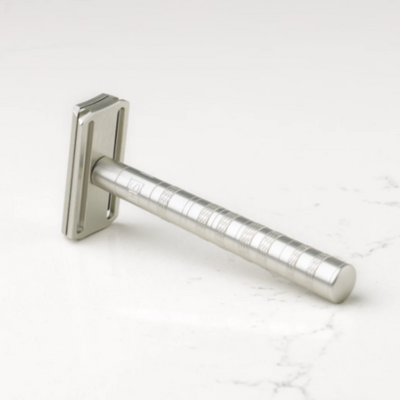
Avoid overbuying early. You don’t need five razors and a drawer of soap tubs to learn technique. Two months of steady shaves with one setup teaches more than constant gear rotation. When you do explore, change one element at a time so you know what made the difference.
The quiet satisfaction that keeps people with it
There’s a sense of flow when a safety razor glides with zero chatter, the lather stays glossy, and each pass removes exactly the amount of stubble you intend. The bathroom smells faintly of soap instead of aerosol. Your skin feels calm instead of tight. You spend a trivial amount on razor blades and never have to pick between overpriced cartridges behind a locked cabinet. After a few weeks, your hand simply knows the angle, even half awake.
If you enjoy small rituals, wet shaving rewards you every morning. If you want no fuss, it still beats the tug and burn from many cartridge routines. And if one day you decide to experiment, an adjustable here or a different blade there opens new textures without starting from scratch.
Mastering the safety razor doesn’t require perfection, just consistency. Map your grain, hydrate well, find a blade that suits your beard, and let the weight of the Razor do the work. The rest is refinement.